
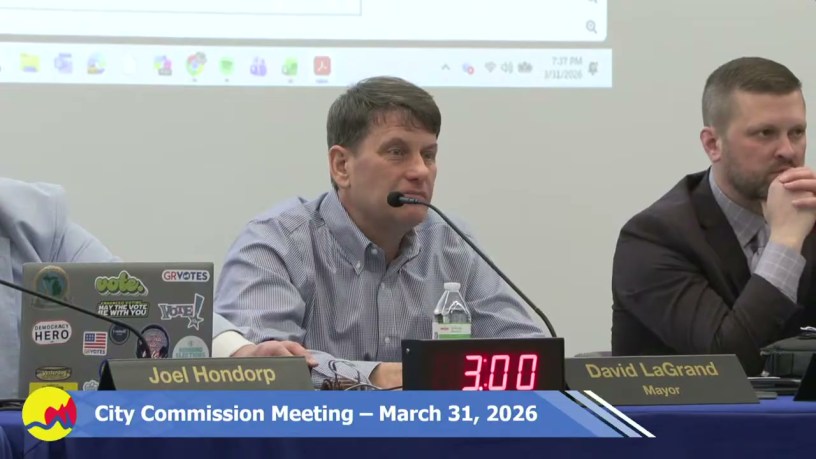
GRAND RAPIDS, Mich. — More than 20 residents packed Tuesday’s City Commission meeting demanding justice for Daquan Johnson, who was killed by Grand Rapids police, while calling for the release of unedited body camera footage and implementation of sanctuary city policies to protect immigrants from federal enforcement.
The passionate public testimony followed a morning police presentation on officer-involved shootings and reflected mounting community frustration over what speakers characterized as a pattern of police violence and lack of accountability. No action was taken during the public comment period, but the testimony underscored deep tensions between residents and city leadership over policing policies.
“In what world does someone who’s already being restrained, held down, and attacked by police dogs deserve to be shot in the back?” said Chloe Mulder, referring to the Johnson shooting. Her question captured the raw emotion that dominated the evening as speaker after speaker criticized the department’s handling of fatal encounters.
The Johnson case has become a flashpoint for broader police accountability demands in Grand Rapids. Autumn, who identified herself as connected to another police shooting victim, told commissioners: “Patrick Loyola was shot in the back of the head in my grandmother’s driveway… That land is tainted.” Her testimony highlighted how police shootings have personally affected multiple families in the community.
Several speakers questioned the city’s spending priorities, with Lauren asking commissioners: “Why are our tax dollars going towards an entity that is executing lives in our streets?” The comments reflected growing calls for budget reallocations away from policing toward social services and community programs.
Beyond police accountability, residents also pressed for sanctuary city policies that would limit cooperation with federal immigration enforcement. Shannon Tanis and Ellen Atkins were among those advocating for stronger protections for undocumented residents, arguing the city should take a more active role in shielding immigrants from deportation.
The testimony came as Grand Rapids continues grappling with multiple officer-involved shootings and community demands for transparency. Body camera footage has become a particular point of contention, with residents arguing that edited versions released by the department don’t provide the full picture of what occurred during fatal encounters.
Commissioners listened without response during the public comment period, but the volume and intensity of testimony suggests police accountability and immigration policies will likely resurface as formal agenda items in coming meetings. The passionate turnout demonstrated that community organizing around these issues continues gaining momentum despite months of similar testimony yielding limited policy changes.
 Grandwire